
What to see in Syracuse: from Greek Heritage to the Island of Ortygia

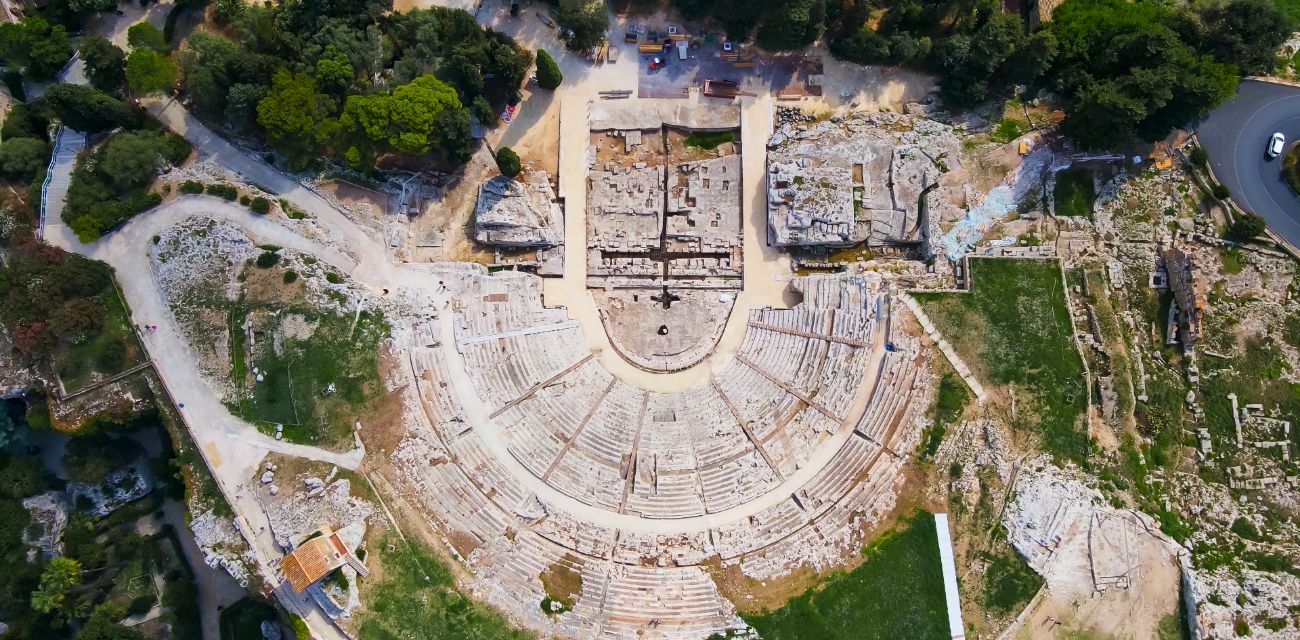
Syracuse is a city that resists being reduced to a hurried list. To truly appreciate what to see in Syracuse, think of it first as a Greek city, long before its Baroque era. Begin with a sweeping view from the Epipoli plateau, where the Eurialo Castle, Dionysius’s formidable fortress, stands as the key to ancient defences. From this vantage, descend into the Neapolis archaeological park, where the city’s story is literally etched in stone: the Greek Theatre, Roman Amphitheatre, and mysterious latomies reveal a world where entertainment, labour, and solitude converged. In the Latomia del Paradiso, the legendary Ear of Dionysius captures myth in its unique acoustics and form, while the “Paolo Orsi” Regional Archaeological Museum rounds out your journey, offering a scientific lens through which to trace temples and inscriptions across the Mediterranean history of this remarkable polis.
Walking Syracuse: crossing from the mainland to Ortygia’s heart
One of the most common questions about what to see in Syracuse concerns the route that links the mainland to the city’s ancient core. Ortygia, “the rock,” little more than a square kilometre, connects to the mainland via two bridges and is best discovered on foot, thanks to its largely pedestrianized centre. Here, Syracuse unveils its secrets through thresholds rather than distances. Begin at the Temple of Apollo, one of Sicily’s oldest Doric monuments, continue to Piazza Archimede, crowned by the Fountain of Diana, and move on to the Baroque splendour of Piazza Duomo. The Cathedral of Syracuse here astonishingly incorporates the ancient Temple of Athena: its columns and walls become the fabric of the cathedral, turning your visit into a living lesson in architectural continuity.
Exploring Ortygia in a day: from the Fountain of Arethusa to Castello Maniace
A focused itinerary for Ortygia in a single day brings you to the waterfront, where legend and defence intertwine. The Fountain of Arethusa, a freshwater spring by the port, anchors geography to the myth of Arethusa and Alpheus, and even evokes the rare papyrus growing in this coastal heart, a surprising presence in a historic center. The seafront, especially at sunset, becomes a panoramic stage. Venture a bit further, and you’ll reach Castello Maniace, the fortress built by Frederick II and named for the Byzantine general Giorgio Maniace, standing guard at the island’s tip. As you wander squares and alleys, don’t overlook Ortygia’s “minor” treasures: the Regional Gallery at Palazzo Bellomo, with its medieval and modern collections, and the Jewish Quarter’s Casa Bianca Ritual Bath (mikveh), an evocative underground space bearing witness to a deep-rooted history. Rounding out the experience are Santa Lucia alla Badia, Palazzo Beneventano del Bosco, and Palazzo del Vermexio, each shaping the civic and spiritual face of Ortygia.
VOI Arenella Resort: your seaside base for exploring Syracuse and Ortygia
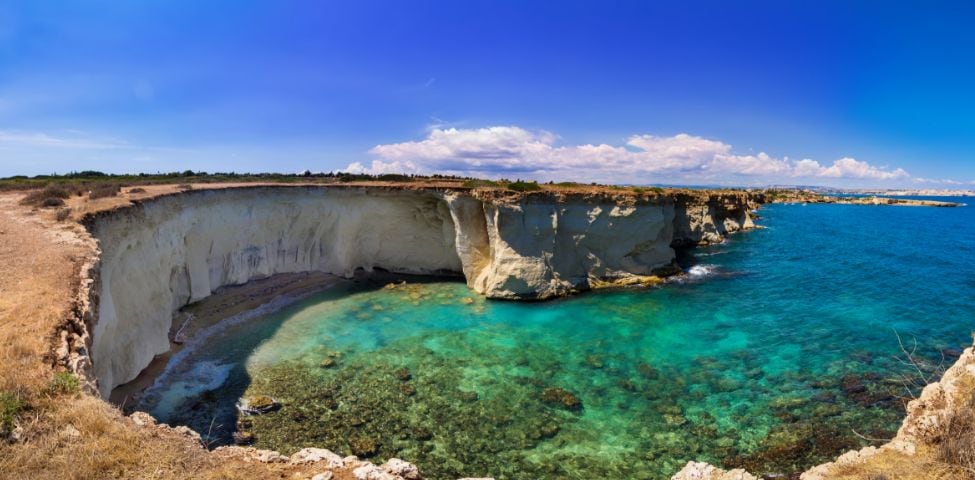
For those who wish to combine archaeological wonders with seaside relaxation, the VOI Arenella Resort offers the perfect base, just a few kilometres from Syracuse along Strada Ognina. Nestled in 65 hectares of lush greenery, the resort offers three swimming pools and multiple dining and bar options, all easily reserved via app. Packages range from half-board with drinks to comprehensive all-inclusive plans. The beach lies about 400 meters from the rooms and is reached by a convenient shuttle; some accommodations include a reserved sun umbrella and loungers (or solarium platforms), plus access to the Wellness Center, complete with sauna, Turkish bath, and Jacuzzi.
FAQs - What to see in Syracuse
In one day, you can discover Ortygia and its main squares; two days let you add Neapolis, the archaeological museum, and the city’s ancient quarries to your itinerary.
Start with classic Syracuse on the mainland, then move to Ortygia for an afternoon and evening of discovery.
Seek out the Casa Bianca mikveh and Palazzo Bellomo; they reveal layers of identity and history far beyond the usual postcards.