Curiosities About Calabria: what to know about the land of the Riace Bronzes

Calabria is a boundary‑region both geographically and culturally: a strip of Italy suspended between the Ionian and Tyrrhenian Seas, where the legacy of Magna Graecia coexists with unexpected mountain landscapes and with a fabric of myths, identity‑driven products, and local rituals. Among the most cited curiosities about Calabria, the Riace Bronzes serve as a perfect emblem: two Classical‑era warriors recovered from the sea that, even today, force a new way of looking at the South—not as a “periphery,” but as an archive of the Mediterranean. To navigate the region without reducing it to a postcard list, it helps to follow three coordinates: Reggio Calabria and the Strait as threshold; the coasts as a mosaic of micro‑territories; the inland as counterfield, with thermal waters, forests, and villages that preserve the most fascinating traditions.
Where to see the Riace Bronzes and why they are a unique example of Greek art in Italy
The Riace Bronzes are two bronze statues dating back to the 5th century BC, discovered on August 16, 1972, near Riace Marina: the find, attributed to diver Stefano Mariottini, occurred at about 8 meters of depth and opened one of the most debated chapters in Mediterranean archaeology. Today the statues are displayed at the National Archaeological Museum of Magna Graecia in Reggio Calabria, where the visit is not simply “museum‑like”: it is a lesson in technique and perception. The figures, conventionally identified as Statue A and Statue B, show an anatomical rendering and scenic presence that explain their fame on their own; and yet, their prestige fuels the most intriguing part of their story, because attribution and provenance remain hypotheses, not certainties. In cultural‑travel terms, this means one thing: you don’t go to Reggio Calabria just “to see two statues,” but to experience a place where classical art, conservation, territorial identity, and contemporary narrative interact.

Which curiosities about Reggio Calabria and the Strait reveal myths, mirages, and geography
Reggio Calabria lives on the edge of the Strait of Messina, and this position produces real phenomena that seem legendary. The most famous is the Fata Morgana, an optical mirage that—under specific atmospheric conditions—can make the opposite coast appear “elevated” and extremely close: a physical fact turned into popular storytelling. The city is also often introduced through the Lungomare Falcomatà, traditionally called “the most beautiful kilometer in Italy”: a phrase that, rhetoric aside, captures an essential point for anyone seeking beaches and scenic viewpoints without moving far. Here, “curiosity” is not a folkloric detail, but a way to understand Calabria as a territory of passage: the Strait doesn’t separate—it connects; and the Reggio coastline is not just seaside leisure, but cultural geography, where myth and landscape walk hand in hand. In this area, hidden beaches are not necessarily remote: they are often small bays and quieter stretches of coast, to be discovered at a slow pace and with attention to sea conditions.

What makes Calabrian traditions authentic among flavors, festivals, and thermal waters
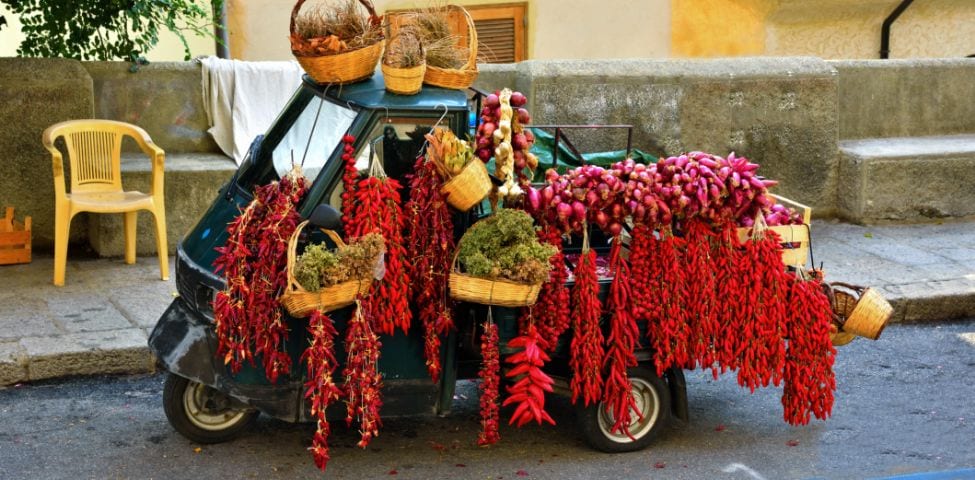
Many guides choose a gastronomic entry point because in Calabria food is a language: ’nduja, tied to the area of Spilinga, is described as a soft, spicy cured meat that has become a symbol of a cuisine “with character”; bergamot, concentrated mainly in the Reggio area, represents the opposite emblem—more aromatic and “noble,” with a destiny that crosses perfumery and cuisine. Alongside the flavors, however, the most fascinating traditions emerge: identity celebrations, community practices, devotions, and rituals that convey the historical depth of a region often oversimplified. And then there is the inland, which overturns the idea of Calabria as “just coast”: between Sila, Aspromonte, and Pollino, the experience becomes forest, plateau, riverbeds, and trails. In this context, Calabrian thermal baths enter as both natural and cultural elements: waters that tell geology and local history, useful for those seeking a rhythm that is less summer‑driven and more “four seasons.”